Saturday, May 7, 2011

Sluts and Crybabies

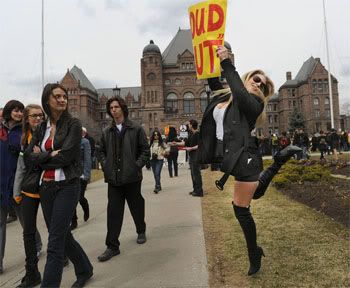
"Proud to be a slut" marchers protest through
downtown Toronto, yet glance disapprovingly
at the girl who is dressed like a slut holding
a poster which says "Proud Slut" (video here)

The ever-industrious Steve Paiken of the current affairs/news program The Agenda (broadcast on Television Ontario) brought together a panel of women (men were notably absent) to discuss the recent Slut Walks, which I blogged about here.

Here is his panel:

- Susannah Breslin is a freelance journalist and blogger from Texas.

- Jaclyn Friedman is the executive director of WAM! (Women, Action and the Media) from Cambridge Massachusetts, and according to web sources a "Queer Jewish writer." Friedman had a weird coy demeanor during the panel discussion, as though she were trying to seduce the viewers. I didn't realize she had the other demographic in mind.

- Gail Dines is a professor of sociology and women's studies at Wheelock College, in Boston and author of Pornland.

- Heather Jarvis is co-founder of The Slut Walk in Toronto.

- Kate McPherson is a professor of history and women's studies at York University, Toronto.

So, in a panel of five women, two are professors of women's studies, one is a director of a clearly feminist agency, one has written a pornographic book (as well as holding a professorship in women's studies), one is the co-founder of The Slut Walk. And finally, one is "queer."

Also, two of the women, Heather Jarvis and the lesbian Jaclyn Friedman, said that they were "sexually assaulted" which in today's scenario could mean anything from a boyfriend thinking "no is yes" after his girlfriend takes him up to her room late at night

The only one who is not defined by her "womanness" according to TVO's biographies, is Susannah Breslin, who is presented as a freelance journalist and blogger (and I would assume - no I will conclude - that she is the least stable financially and "career" wise) although she's now a Forbes blogger (which is no professorship).

And guess who was the one holding the fort against these formidable r-e-s-p-e-c-t (as Hugh Grant would put it) feminists? Yes, the lowly blogger.

The discussion around the feminists revolves around "taking back the word 'slut'" as in those years when women were "taking back the night", and homosexuals "reclaiming queer." Of course, at Breslin's push, the women started to redefine what they meant by "reclaiming" the word "slut." It goes something like this: If some women are called sluts because of the way they dress (and what triggered the whole march in the first place is a police officer's observation that if women wanted to be free from sexual assault, they shouldn't dress like sluts), and if this causes them to be raped, then all women are in solidarity with these sluts, and are sluts themselves, in protest against men raping women who are dressed like sluts.

The funny thing is that none of these women were dressed like sluts on Paiken's show, even Friedman, who does don the attire at her queer/feminist protests. But they have no qualms about naïve, young girls in the avant-garde parading their flesh while holding "slut" signs. So, what part of "slut" are they reclaiming, as Breslin challenges them?

Just before this panel, Paiken held an interview with Anne Kreamer who is the author of the book It's Always Personal: Emotions in the New Workplace. The whole interview was funny (in an embarrassing way) to watch. Kreamer advocates crying in the workplace, and that stiff upper lips are no good. Of course, the majority of work-place-emoters are women, but Kreamer also talks about men who cry, and who felt "cleansed" after the experience. She didn't bother to delineate (at least in the interview, and Paiken never pressed her) what is the incidence of men crying. The reality, of course, is that, women cry more often, and in public. All I can say is that the work place is a kind of a war zone - money, projects, prestige, success - are on the line. The nice guy does finish last. What this translates to, which these women would never admit to, is that women are less suited to this cut-throat environment. There are two solutions to their problem: one is to have fewer women in high-stake positions; the other is to regulate the work force to make it more conducive (nicer) for women workers. So far, the latter is winning.

Kreamer's interview was the perfect introduction to the panel. Despite "rewriting" the word "victim" during the panel, what the women are really saying is that women are victims (weaker, more vulnerable) when it comes to rape, which is often performed by men because they are women. Like the career women, these feminist experts want society to rewrite the reality of the world, make it soft and gentle, so that women can do what they want including dress as sluts (and not be raped).

To catch all the nuances, expressions, vocabulary, explanations and other fascinating aspects of both the panel discussion and the interview, I recommend the two videos from TVO's site:

- Anne Kreamer: Emotions in the New Work Place
- "Slut Walks" and Modern Feminism

Friday, May 6, 2011

New Leaves: II

[Photo by KPA]

Wednesday, May 4, 2011

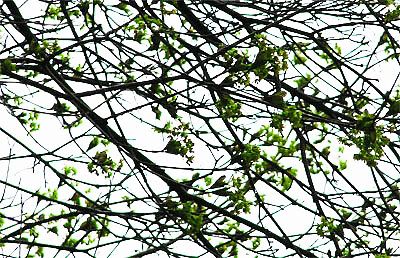
New Leaves

[Photo by KPA]

It was an overcast day when I took this photograph yesterday, but it didn't dampen the early leaves of spring. Overcast days are actually ideal for taking photos. Sunlight can interfere through heightened shadow and light regions, making it difficult to take photos.

Tuesday, May 3, 2011

Speaking Freely Can Get You Convicted of Hate Speech in Denmark

Kurt Westergaard, the Danish cartoonist (left) with Lars Vilks, the Swedish cartoonist (right) both in hiding after threats from Muslims

Lars Hedegaard, President of the International Free Press Society, has been convicted of "[issuing] a pronouncement or other communication by which a group of persons are threatened, insulted or denigrated due to their race, skin colour, national or ethnic origin, religion or sexual orientation."(The quote is from Diana West's website, who has a fuller review of the conviction.)

I met Mr. Hedegaard in 2009 during an International Free Press Society sponsored conference in New York on freedom of speech and how Muslims are transforming Western societies. The conference was held specifically to introduce the Danish Kurt Westergaard, illustrator of the (in)famous Danish cartoons which were a satire on Mohammed and Muslims. Kurt Westergaard, Hedegaard's compatriot, was facing Muslims' ire for his illustrations (cartoons) which they felt demeaned their religion and their prophet. Through his experiences, the hardest of which is his life in hiding from death threats by Muslims (similar to what Geert Wilders is facing in the Netherlands), issues like freedom of speech started to come to the fore of political and public discussions.

Hedegaard is the last person to denigrate people, although he has strong and substantiated views on Muslims, immigration-run-amok in Denmark, and Western values and institutions that are being dismantled or changed (such as freedom of speech) because of immigration, and specifically Muslim immigration. His conviction is more symbolic than anything else. He was fined $1,000 and he plans to appeal.

This (symbolic) conviction is a blessing in disguise. It will put Hedegaard in the news for a while because of his appeals process, and he will be able to reach more people with his views on how Muslims, and Muslim immigration, are transforming Denmark. The more information people get, and the more outrageous cases like Hedegaard's, Westergaard's and Wilders's become public, the truth about Islam and Muslims will be revealed.

Here's more from the International Free Press Society website:
Lars Hedegaard was today [May 3. 2011] found guilty of hate speech under Article 266b of the Danish penal code...

§ 266b of the Danish penal code:

“Whoever publicly or with the intent of public dissemination issues a pronouncement or other communication by which a group of persons are threatened, insulted or denigrated due to their race, skin colour, national or ethnic origin, religion or sexual orientation is liable to a fine or incarceration for up to two years.”

Let Them Wear Hats!

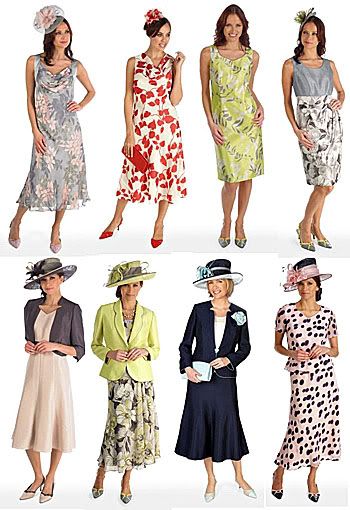
Jacques Vert's Fashion. Good hat design
influences the quality of other attire.

One thing about the royal wedding which is heartening is that perhaps, maybe, people will start to wear hats again. The British royalty has always got the flak for its hat-wearing tradition, but finally I think they have got it right, and people are noticing.

But, often, attention to accessories also translates to improved quality in over all dress. When designers design good hats (or shoes), the rest of the attire has to reflect that. So, this glance at hats that I'm seeing may result with improved dresses, jackets, skirts, blouses, etc.

But back to hats. It is possible to wear an attractive hat (rather than a toque-like woolen affair) even during the coldest parts of the winter. One solution is to work with layers (putting a warm woolen toque under a more attractive hat) which I have done. I've also sewn hats, or around hats. For example, I bought a length of faux fur fabric and simply placed it around a warm woolen (not very attractive) hat to make it look like those Russian fur hats. And adding the same fur around the coat collar ties everything together. The difficult part is how unaccustomed people are around hats. A simple 1920s style hat (in burgundy) which I wear when the temperature is not so low gets surprised reactions (one person said he remembered me because of my hat) from strangers. I hope to break into an orange straw hat for the summer. Someone has to start!

I was at the Bay again since I did receive an invitation to its Jacques Vert collection, which is a permanent collection with seasonal variations. I didn't know it was so substantial, and quite affordable. And quite beautiful too. The sales girl was very obliging, and took me around, describing how it was displayed in sets, mostly of colors, with dresses, skirts, jackets, shoes, purses, and of course hats. (The Jacques Vert on-line store in the U.K. has what looks like a complete display of the items that were in the Bay for the spring/summer season.) I was surprised that the sales girl especially liked a conservative, navy blue set. She looked like she was in her late twenties, early thirties. I've always believed that women (especially the young women we see around in skimpy, ugly, dark "uniforms" who assiduously follow "fashion") actually will take on beauty (and prettiness) if given the chance.

Now, why not dive into color, especially for spring? That's what I told the sales girl, and she confessed to buying a lovely chiffon blouse with orange floral prints (here it is). Then she said she'd wear it with black pants. I didn't want to belabor the point, although I couldn't help pointing out that a cream skirt (already available with the set she was pointing to) might be better. Still, working in a Jacques Vert section, and looking at the clothes, surely gets her to see in the world in colors rather than in black and gray (and navy blue).

Often, a good design, fabric pattern, cut, color, etc., will influence the quality of other items. The dearth (or the eccentricities) of our contemporary fashion is partly because we have no good designs. If the royal wedding gets to promote designers like Jacques Vert, who are affordable but with quality designs, that would be wonderful. I have my doubts, though, and that this attention is the novelty (fashion?) of the moment.

Some welcome things at Jacques Vert are:
- Many of the dresses are floral (and other) prints
- The dresses have longer lengths than the minis I'm seeing these days
- The dresses and skirts come in sets, with jackets, blouses and sweaters
- There was a wide range of colors from subtle pinks to pale greens and brighter oranges and blues
- Shoes and handbags can be co-ordinated with the dresses, and are available on display

Monday, May 2, 2011

"Proud to be a slut"

"Proud to be a slut" marchers protest through
downtown Toronto, yet glance disapprovingly
at the girl who is dressed like a slut holding
a poster which says "Proud Slut" (video here)

Mark Richardson over at Oz Conservative has a post on a television program about an Australian women's magazine called Cleo which came out in the 1970s. He writes that Ita Buttrose's (editor of the magazine) climb to senior management was never curtailed despite the mythical "glass ceiling" that prevailed, and Buttrose having children (her boss took care of her nanny bills) during her "career" at the magazine.

Mark Richardson writes:
The female staff of Cleo were shown going off to listen to a young Germaine Greer. When they came back to the office the consensus was that Greer's feminist politics were good but that she was too aggressive in how she presented them. One of the staff then summarized feminism this way:
It's how we're defined - not a woman, not a wife, not a daughter but as a person.
That is of course liberal autonomy theory. It's the idea that we are made human by being self-defined, rather than by unchosen categories like our sex.
Yet these young women want it all, which is a manifestation of Richardson's liberal autonomy theory of self-definition. Ita and her friends want the high power careers. They also want time off to have their kids, and if not, special compensations for child care (as in the nanny that Buttrose secured from her boss). They then divorce their husbands, who most likely grumbled and didn't support whole-heartedly their all-consuming careers. They then have affairs, possibly get married again, and divorce one more time. Ita, twice divorced, is single again at forty, although it is highly likely that she will remarry, or "cohabitate" to prevent the strictures of marriage from dampening her autonomy.

But one variation of this new-age feminism that differs substantially from the vanguards' is the emphasis on femininity. This isn't really surprising, because it is part of women "wanting it all" including subscribing (to their advantage) their natural sexual manifestations. Richardson continues:
But Ita Buttrose didn't follow [liberal autonomy theory] in the way that the most radical feminists did. She didn't look on women wearing lipstick or having sexual relationships with men as being a betrayal of feminism. She was a forerunner of a "sex positive" feminism. If Ita Buttrose wanted to be liberated from sex roles, it was more by pushing a single girl lifestyle in which women were "liberated" to pursue casual sex and careers.
It was a variant of feminism more likely to appeal to young heterosexual women and it has undoubtedly been influential.
The reality out in the trenches, though, is a little different. Yes, glossy fashion magazines showcase the latest shades of coral lipsticks, and lovely silk scarves hang on (some) mannequins in shop windows, but young woman are not wearing these feminine attire. Instead, they opt for variations on black, gray, and perhaps navy. The only "color" that might be thrown into the mix is white, but sparingly. A daring woman might wear red, but usually on unfeminine items like sneakers. Make-up hasn't totally disappeared, but where it is prominent is in punkish, exaggerated black kohl and thick mascara.

I think what is going on is that women secretly yearn for femininity (although I think this is an actual biological reaction and need, rather than an "autonomous desire"). But they cannot succumb to this need for fear of appearing to reject feminism, as Richardson shows above. Imagine the schizophrenic back and forth that must be going on in their minds!

As I wrote above, one way young women can avoid this schizophrenia is by sporadically, and in a limited way, adding feminine touches - such as having children, but avoiding caring for their children, or wearing lipstick, but pursuing high profile, and highly demanding, careers. In the end, the result is the same, or probably worse. There is now a much longer list of wants, desires and needs - from careers, to children, to lipstick - that women must satisfy (or fulfill), and many contradicting or restricting each other.

One thing I've noticed here is that young women are wearing extremely short skirts, and now in spring, they're donning very short cut-out shorts, often (as though this will help) with dark tights. These skirts are dark, dreary, and ugly. At least the sixties brought color and pizazz with mini-skirt fashion.

My assessment of this depressingly ugly trend (many of the girls are over-weight, so we are forced to look at bulging body parts as well) is that it's that schizophrenic attempt at reconciling femininity with autonomy: I will dress how I want, but I will also look like a girl. It is the "sex positive" (to use Ricahrdson's coinage) compensation of reconciling femininity with autonomy. But all they end up looking is like prostitutes, which is the last thing - consciously, at least - they're after.

Toronto recently had a "proud to be a slut" walk to protest a police officer's comment that women shouldn't dress as sluts if they want to be safe from "sexual assaults" - of course the officer has since been forced to apologize. The march is a jumble of contradictions. Many of the women were dressed in the uniform black/gray formless clothes, but a few came out in the fashion-less cut-outs I discuss above. The "sluts" seemed to get disapproving looks from their serious, un-slutty "sisters" despite the message of the walk. Signs such as "proud to be a slut" were everywhere, held both by the dowdy and the slutty. And even men joined in the march. "Everybody deserves respect no matter who they are or how they chose to look" says a spokes"woman" in a back leather jacket and piercings on her face, who clearly isn't a slut.

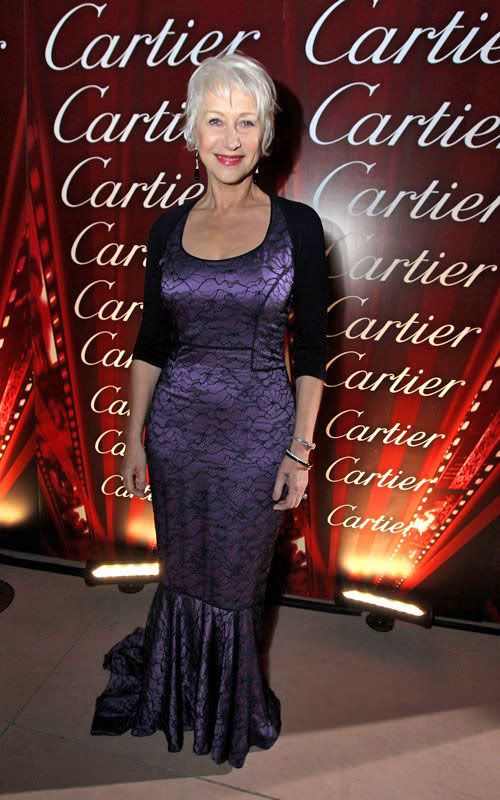
It isn't only young women who are caught in this tangle. I've written about sexagenarian actress Helen Mirren, and describe her manifestation of what constitutes beauty (see photo below) as looking "like those Madames in Western brothels." Yet, this matured woman stills lives in a schizophrenia of contradictions by embracing the ugliness (or anti-beauty) that is in order in our modern world.

Helen Mirren at a recent film premier

Sunday, May 1, 2011

Daffodils for Spring

Photo by KPA

Daffodils
William Wordsworth

I wandered lonely as a cloud
That floats on high o'er vales and hills,
When all at once I saw a crowd,
A host, of golden daffodils;
Beside the lake, beneath the trees,
Fluttering and dancing in the breeze.

Continuous as the stars that shine
And twinkle on the milky way,
They stretched in never-ending line
Along the margin of a bay:
Ten thousand saw I at a glance,
Tossing their heads in sprightly dance.

The waves beside them danced; but they
Out-did the sparkling waves in glee:
A poet could not but be gay,
In such a jocund company:
I gazed--and gazed--but little thought
What wealth the show to me had brought:

For oft, when on my couch I lie
In vacant or in pensive mood,
They flash upon that inward eye
Which is the bliss of solitude;
And then my heart with pleasure fills,
And dances with the daffodils.