Monday, August 13, 2012

Prescient Perceptions

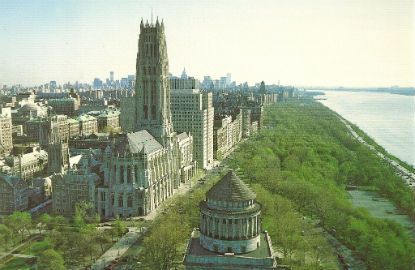
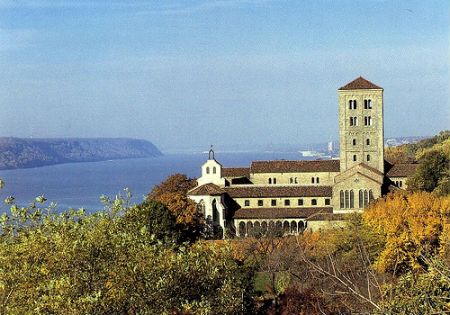
A view of the Cloisters with the Hudson River
in New York City


Laura Wood, from The Thinking Housewife, writes to Lawrence Auster at View From the Right:
You have done a great job over the last several days.
I agree. View From the Right has been unusually active and prescient these few days (and months).

Larry Auster responds to Laura:
But I think my message is too much for people to take. It’s getting too much for me to take.
To which Laura replies:
The alternative is denying reality and denying that things are as bad as they are.
I agree that writing about reality these days is exhausting. It is summer after all, and why not write about the warm weather, and other cheery things? But, each time I am about to do that, right next to what I'm observing, or alongside what I'm thinking, something negates this.

I'm not sure where this will lead, for now, at least. But, still, there are beautiful things to wonder at, observe and record. I will continue to do that as I go along.

Sunday, August 12, 2012

A Road Less Taken

A view of the Cloisters with the Hudson River

I cannot upload photos from my camera to the computer I'm using while in New York. I will make a file (a post) of photos I took here when I return to Toronto.

But, there are plenty of online images to download.

I tried to get to the Cloisters today. They are a branch of the Metropolitan Museum, but they are somewhere in the Netherlands of New York City. They are located in an area called Fort Tyron Park. The closest street intersection is 190th Street. I'm not sure if this is the Bronx, or if it is still Harlem, but I decided to take the M4 bus which supposedly goes straight there. It didn't happen so easily.

There was some kind of parade (actually it was the Puerto Rican Day Parade, or more precisely the National Puerto Rican Day Parade - what is "national" about Puerto Ricans in New York?) which held up buses between 44th and 79th on Fifth Avenue. At one point I waited close to half an hour to get a bus. When one finally arrived and we climbed on, we had to get off on 135th Street because...well the driver couldn't give a reason. He parked the bus and waited inside. Then this parked bus suddenly took life, and the patient group that was waiting for another (some people just left - to catch a cab?!) was allowed back on this one.

But it really was worth the wait. The ride on the M4 from about 135th street down to 79th was incredible. The bus went down Riverside Drive, along the Hudson and past the beautiful Riverside Church (which I think is even more beautiful than St. Patrick's, or St. John the Divine's just above 110th Street) until the driver turned on 79th Street and took Broadway. I went all the way to 59th Street and Columbus Circle and took the M10 down Central Park West, to get more views of another of New York's beautiful park. I got off just before 110th Street, where Central Park ends, to get to where I was staying on the Upper West Side. The ride took shorter than I thought, although it is a good 45 minutes. I highly recommend this "tour" for a mere bus token ($2.25). There were plenty of tourist buses taking a similar route, and I'm sure their's was an expensive affair.

A view of the Riverside Church with the Hudson River

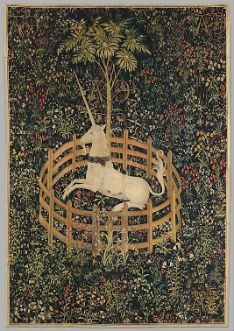
One of the reasons I wanted (want) to go to the Cloisters is to see the beautiful unicorn tapestries.

The Unicorn in Captivity
At The Cloisters


(I've linked to backgrounds on The Cloisters and the tapestries, but I will write some more tomorrow on how they got to New York and to such a location. It is a fascinating bit of New York history.)

Saturday, August 11, 2012

Adept Attackers of Beauty

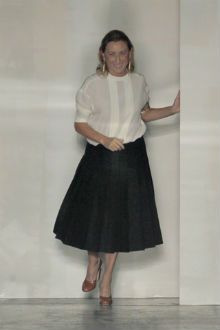
Frumpy, home-body Miu Miu

I sent the email below, along with a link of my blog post From Schiaparelli to Prada: Deterioration of Culture to a correspondent.

I have written a long post on the Met's exhibition "Schiaparelli & Prada, Impossible Conversations" (linked above), but this email adds more on my ideas and observations about the decline, or perversion, of culture that I see around me. Art, and artists, are often the first to grasp (either by accepting or rejecting) societal changes. I think Prada has given us some insights, not what she really wants us to see but nevertheless insights, on our current culture.

Here is my email, which I titled: War on Beauty and the related War on Masculinty:
Hi ____,

I read a little while ago your post on beauty with interest.

Beauty is a hard concept to "analyze" and to "deconstruct" as leftists love to do. It is an ethereal presence. We react to beauty rather than coldly observe it. We have to admit it is there in some things, probably not in us, and thus we realize it is some kind of favored state (it is clear that beautiful people, and babies, are treated better than ordinary people). At our best, we are humbled by beauty.

This hierarchy of beauty is what grates liberals and leftists.

I've written several (many) blogs on beauty, and I've noticed that there is an even more vicious war going on against beauty than when I started my blog a few years ago. This time, I think people are well-versed on how to attack beauty, and how to make beautiful people, things, etc. feel they're doing, and are, something wrong (and evil). Decades (even centuries, if you look back at the origins of modernism) have made such people adept attackers of beauty.

I wrote this post on Prada's really ugly clothes after I saw the exhibition "Schiaparelli & Prada, Impossible Conversations" at the Metropolitan Museum. Schiaparelli, in her time (around the turn of the 20th century), was considered a radical fashion designer, yet her least feminine designs are not as viciously ugly as Prada's. Schiaparelli was also much more talented, skilled (trained, I think) than Prada, and she admits the power of femininity and feminine beauty.

Prada is the post-modern feminist who seems to have a visceral hate for femininity. and feminine beauty, and ultimately beauty in general (I won't go into the many viciously anti-woman homosexual designers, since perhaps their deficiencies are obvious, but the heterosexual, female Prada is the ultimate betrayer.)

Prada of course supports all the evils that come with feminism, yet her life is strangely traditional, with a husband of several decades, two grown sons, and one son who is following her footsteps in her fashion design empire. She herself inherited this already successful empire from her father and grandfather, so she hardly qualifies as a female empire builder. She holds her temperamental husband at bay by giving him the high profile role of managing her company (and metaphorically, her too?). She's a clever, smart feminist. Those are the types that really do rule this world, since they realize that the female energy IS different than the male's. So, what they're after in not equality, but a reversal of roles (of power), even though they know from experience that this isn't likely to happen. But, I think even clever, smart Prada succumbs to her illusions, since her inner-most desire must be (from all the information she keeps giving us) to make women the superior sex. I think one of your correspondents called this envy. I think that is what it is. The natural, obvious, strength (power) of men, which they carry with such ease, is something to be admired, just as beauty is to be admired in beautiful women. When this admiration is perverted, it turns to something ugly like envy. I think we are in the age of perversions. And this is manifested, at least in my observations of culture, in the cult of ugliness as a vicious retaliation against beauty, and I think related to that (since it all presents itself as equality) the cult of male feminization, which is part of the degradation masculinity.

And finally, what happens if a woman can no longer be beautiful? The alternative now is that she has to look masculine. How does Prada reconcile all that with her "hatred" of masculinity AND femininity? One way is that modern fashion designers (and artists in general) who still work with/for/about women are creating alien monsters, neither male nor female. But, this is something I've just began to observe, and I still have to think about it some more.

Kidist
Android, from Prada's 2013 collection

From Schiaparelli to Prada: Deterioration of Culture


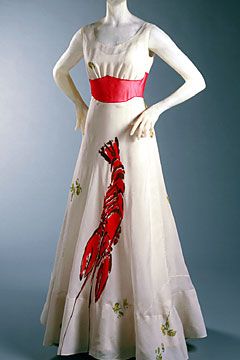
Schiaparelli's designs displayed at the Metropolitan's
Schiaparelli and "Prada: Impossible Conversations",
with the shoe-hat, the lobster dress, and other gowns.


-----------------------------------------------------------------------------------------------------

When a fashion designer says that her aim is to introduce ugliness into women's clothes, what do you do?

That is what Prada said in an imaginary dialogue she held with Schiaparelli, the "avant-garde" designer of the early twentieth century.

The "Dream Dialogue" between Schiaparelli and Prada is part of the Metropolitan Museum's "Schiaparelli & Prada, Impossible Conversations" exhibition that runs through August 19. Prada appears as her self, and Schiaparelli is reincarnated by the actress Judy Davis.

Prada is our contemporary expert on women's clothes. Her clothes are uninteresting, and their ugliness factor is more a boring lack of style than anything "shocking" the avant-gardists attempted through wit and imagination at the peak of their creativity. Prada says she is influenced by Schiaparelli's designs, and hence the exhibit (and her new line of work). But what she's really after is the rebellious essence of the early twentieth century avant-gardists. Of course, she misconstrues their efforts and intentions. They never wanted to destroy beauty, skill and culture, as do die-hard post-modernists like her.

Prada is the avant-gardist of our era, who wishes ugliness for women. That is her "shocking" contribution to her art. Not playful lobster dresses and witty shoe-hats (from the foot to the head, as Schiaparelli joked). But the telling point in Prada's conversation with Schiaparelli was not that she wishes simply ugliness for women and to discard their femininity (if these are just simple things), but that she wishes POWER for women. Power over what? Over men; over their destiny as women (the weaker sex, as she calls women); over their bodies, one of which is of course their ability to have (and NOT have, in Prada's argument) children. Prada, as with all feminists, doesn't really want equality for women, but a recreation of their person-hood. She wants to destroy the feminine woman, destroy her feminine essence and unique strength, which according to feminists is woman's weakness, then create a super creature that presides over all others, and especially over men. What feminists ultimately wish to create, although they would never admit to this, or even recognize this, is an alien creature/monster.

Schiaparelli is the better, the more talented, the more skilled, the more educated designer. Her clothes are well-crafted, her textiles well-chosen, and her designs far more superior than what Prada has to offer. Even her presence is more alluring and imaginative than the frumpy Prada. Still, there is no denying that Schiaparelli's playfulness did contribute to the decline in cultural excellence. She dismissed skill for pure imagination. Prada is ultimately her heir, who works simply with her ideas, without the finesse and skill necessary to back them up.

Prada is the supreme post-modern artist of our era. Ideas (and almost always bad, ugly ideas) are the crutch she leans on, as though things materialize out of the nether worlds of her vapid brain.

I would get Schiaparelli's "lobster dress" and "shoe-hat" any time over Prada's drab dresses.

The exhibition entrance is a suggested $25, but you can enter with a donation of any amount. The guy at the ticket booth took my "donation" of $2 with good humor. You can spend quite a bit of money at the Museum's store, with its overpriced, but one-of-a-kind items made especially for the exhibition, to make up for a lower entrance fee.

My instincts were right about Prada's feminism which leads to equality, which ultimately means power of women over nature. Here is some background on her:
As a young woman, Prada, who has a degree in political science and then studied mime with the Piccolo Teatro in Milan, was a signed-up member of the Communist Party and a reluctant inheritor of her grandfather's leather goods and glass company. She finally took the helm there in 1978.

"Italian society was becoming obsessed with consumerism, but my big dreams were of justice, equality and moral regeneration," she said. "I was a Communist but being left wing was fashionable then. I was no different from thousands of middle-class kids."
I suppose her slabs of ugly glass are some kind of homage to her grandfather Mario Prada, the founder of the Prada line. Yet a convoluted homage it is.
Mario Prada did not believe that women should have a role in business, and so he prevented female family members from entering into his company. Ironically, Mario's son harbored no interest in the business, so it was his daughter Luisa Prada who took the helm of Prada as his successor, and ran it for almost twenty years. Her own daughter, Miuccia Prada, joined the company in 1970, eventually taking over for her mother in 1978.[Source: Wikipedia]
Miu Miu may have never forgotten the second choice women in Mario's family were given to run his business. Her subconscious revenge is to scatter her works with ugly glass and crudely cut leather.

-----------------------------------------------------------------------------------------------------

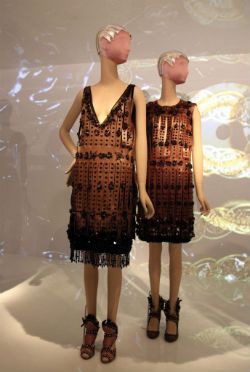
Prada's convoluted homage to her grandfathers glass and leather heritage:

Prada's sack tunic with
what look like glass (but are
probably plastic) slabs from
the Met's exhibition.


Tunics (Roman gladiator?)
at the Met's exhibition
From Prada' s Ready-to-wear
Fall 2009
collection


(More images of the exhibition piece here.)

-----------------------------------------------------------------------------------------------------

And on those avant-gardists. All those I have met (at least the leaders) who SELL the idea of the leftist/communist/anti-establishment avant-garde are bourgeois at heart. Avant-garde is for the common people, who literally, like the advance guard in armies, are sent to the front to fight the real, deadly battles.

Here is how the Department of Defense explains the advance guard:
Detachment sent ahead of the main force to ensure its uninterrupted advance; to protect the main body against surprise; to facilitate the advance by removing obstacles and repairing roads and bridges; and to cover the deployment of the main body if it is committed to action. [Source: Department Of Defense Dictionary of Military Terms]
The common folk get the products that seep out of the distorted imaginations of these armchair avant-gardists, while they live safe and secure bourgeois lives.

That is how Prada is living her life. Her husband is the "boss" as she has arranged it. She acts as the creative force, while he runs the business and rules the staff with his boisterous personality. It is a "family" business, apparently run by the head of the household, Mr. Prada. They have two grown sons, one of whom is joining the family business.

Clever Mrs. Prada, who's kept her name, gives just enough of the reigns to her excitable husband, and sits demurely next to him when necessary.

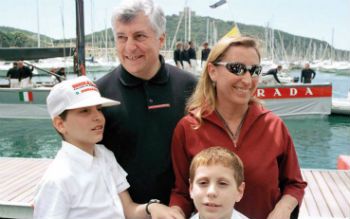
Prada with her husband in 2011

Prada with her two sons below (in 1999), forming her happy family which is still in tact. Families consisting of husband-wife-two/three kids are only for fake avant-gardists like her. Other "families" can be of any type: homosexual parents, unmarried parents, women bringing up their children alone, etc. All of these make up the foot soldiers who change the messy world below the palaces of the pradas.

Prada with her husband and two sons in 1999
Thursday, August 9, 2012

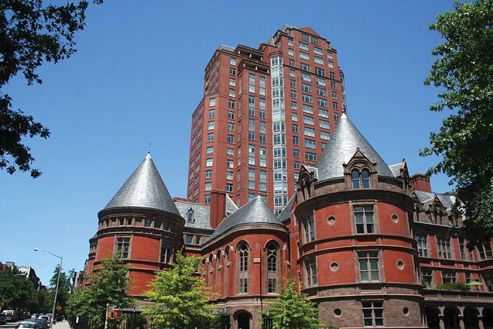
“A conspicuous ornament to the upper part of the city”


Above is a building I pass regularly during my stay in New York. It is on Central Park West, and 106th Street. It has an interesting history.

Here's a website which explains its social and architectural history:
Cancer, in the first decades after the Civil War, had been associated by most with poverty and filth. As education and understanding of the disease improved, wealthy New Yorkers donated money for the establishment of the New York Cancer Hospital – chief among these being John Jacob Astor. By the time the cornerstone was laid on May 17, 1884 $360,000 had been raised -- $200,000 of that being donated by Astor...

[N]ews of Grant’s [cancer] affliction spread across the country and the disease was given new-found national attention, prompting further donations to the hospital which depended solely on private funding...

The site chosen was on Central Park West (then still called 8th Avenue) and 106th Street. Along with the commission, architect Charles Coolidge Haight was given guidelines from physicians on the most up-to-the-minute theories on hospital design.
The website continues to describe the specifications then required of a cancer hospital.

Below is descriptions of the building's architecture (from website linked above):
The building which The Times called “a conspicuous ornament to the upper part of the city” was built of pressed Philadelphia brick with stone trim. An arched loggia connected two of the towers on the first floor, topped by a deep, balustraded balcony on the second; these were included by Haight to give patients access to air and sunlight.
More information on the architect, Charles C. Haight can be found here and here. And this site has architectural drawings

The hospital changed locations in 1955. The building on 106th Street was converted into the Towers Nursing home. This was shut down in 1977, with the intentions to demolish the building. This was prevented when the New York Landmarks Preservation Commission gave it a landmark status.

Renovations on the the building started in 2001, and were completed in 2004. Now, the building houses luxury apartments.

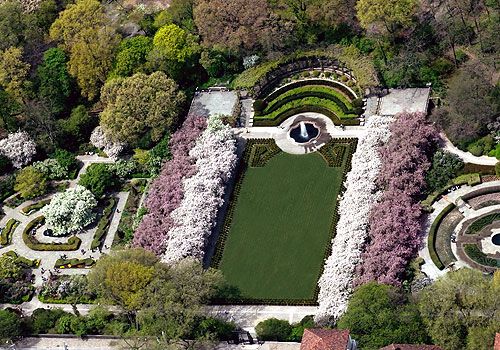
Conservatory Garden in Central Park

Photo from the Central Park Conservatory website

[Larger photo here]


This is a hidden gem (as are many things in New York) in Central Park. It is located between 104th and 105th street, on Fifth Avenue.

Here is what the Central Park website says about the garden:
The Conservatory Garden is divided into three smaller gardens, each with a distinct style: Italian, French and English. The Garden's main entrance is through the Vanderbilt Gate, on Fifth Avenue between 104th and 105th Streets. This magnificent iron gate, made in Paris in 1894, originally stood before the Vanderbilt mansion at Fifth Avenue and 58th Street.
Wikipedia has a little more information:
The Conservatory Garden is the only formal garden in Central Park, New York City. Comprising 6 acres (24,000 m2), it takes its name from a conservatory that stood on the site from 1898 to 1934. The park's head gardener used the glasshouses to harden hardwood cuttings for the park's plantings. After the conservatory was torn down, the garden was designed by Gilmore D. Clarke, landscape architect for Robert Moses, with planting plans by M. Betty Sprout; constructed and planted by WPA workers, it was opened to the public in 1937.
I couldn't find any information on M. Betty Sprout, except that here in Google books (from the the book Garden Guide: New York City) she is mentioned as "[Gilmore D. Clarke's] future wife at the time project was in the planning stages. The Google book reference also mentions Thomas Drees Price as part of the design team.

This site has more information on Price, calling him a landscape architect. He also worked as part of the team which excavated "Horace's Villa" in Rome in 1930.

Sunday, August 5, 2012

Grand New York Architecture For the Public Good

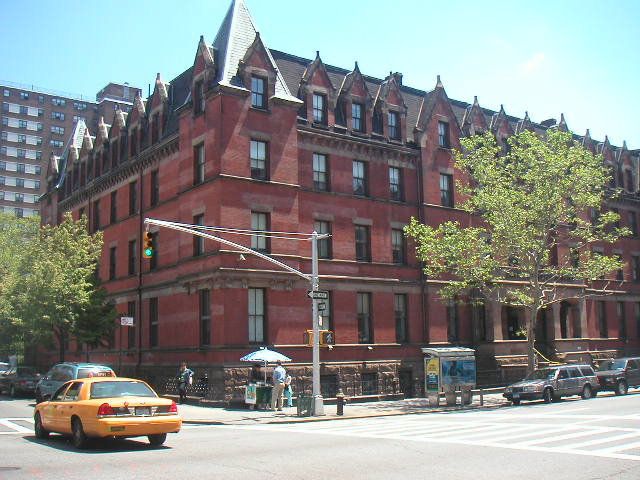
American Youth Hostels building
on Amsterdam Avenue and 103rd Street, in New York City

The photograph above is from New York Architect, which
has many more photographs of the building

[Click on above image to see larger size]


-----------------------------------------------------------------------------------------------------

I'm in New York for a couple of weeks, and I am constantly amazed at the city's architecture. Almost anywhere I walk, there is something that surprises (astonishes) me.

The above building is one I stumbled onto on Amsterdam Avenue and 103rd street.

Here's what Wikipedia says about the building:
The flagship residence of the American Youth Hostels in the United States is in New York City, located in a landmark building designed by noted architect Richard Morris Hunt. This popular hostel occupies the entire east blockfront of Amsterdam Avenue between 103d and 104th Streets in Manhattan.
Here's information on the architect of the building, Richard Morris Hunt:
Richard Morris Hunt (October 31, 1827 – July 31, 1895) was an American architect of the nineteenth century and a preeminent figure in the history of American architecture. Hunt was, according to design critic Paul Goldberger writing in The New York Times, "American architecture's first, and in many ways its greatest, statesman." Aside from Hunt's sculpting of the face of New York City, including designs for the facade and Great Hall of the Metropolitan Museum of Art, the pedestal of the Statue of Liberty and many Fifth Avenue mansions lost to the wrecking ball, Hunt founded both the American Institute of Architects and the Municipal Art Society.
The building was originally:
...designed for the Association for the Relief of Respectable Aged Indigent Females (1883). [It] was renovated in the late 20th century and is now a youth hostel.[Source Wikipedia]
Here's a site which gives more descriptive information on why the building was commissioned by "the women who ran the Association for the Relief of Respectable and Indigent Females."

The building design and construction started in 1881, and it was completed in 1883.

Here's more on the architecture of the building:
The Association Residence Nursing Home, also called the Association for the Relief of Respectable, Aged and Indigent Females, is an historic building in New York City built from 1881-1883 to the design of Richard Morris Hunt in the Victorian Gothic style...An addition was constructed on the south end of the property in 1907, which contained seven Tiffany windows which are now in the collection of the Morse Museum of American Art. The building was placed on the National Register of Historic Places in 1975.[Source: Wikipedia]
And finally, on the "demise and rehabilitation" of the building:
Financial problems due to the longer life expectancy of residents began following World War II. Robert Moses proposed razing the building as part of an Upper West Side slum clearance project. When Medicaid funds became available to nursing homes in the early 1970s, the Association planned to tear down and replace the building with a modern facility. A group of historic preservationists with ties to nearby Columbia University fought to preserve the building, making it into a community cause. Despite a fire during the New York City blackout of 1977 the preservationists prevailed and by the late 1970s, the building was acquired by the City of New York, and declared a New York City Landmark in 1983. During the 1980s the building was unoccupied as American Youth Hostels arranged neighborhood and government support for rehabilitating the building. They opened the hostel in January 1990 and with 670 beds it is now the largest hostel in North America.[Source: Wikipedia]
The building was designated a landmark site in 1983 by the Landmarks Preservation Commission:
On the basis of the careful consideration of the history, the architecture and other features of the building, the Landmarks Preservation Commission finds that the Association Residence for Respectable Aged Indigent Females (Association Residence for Women), has a special character, special historical and aesthetic interest and value as part of the development, heritage and cultural characteristics of New York City. [Source: Landmarks Presevation Commission, April 12, 1983, Designation List 164 (pdf file)]